

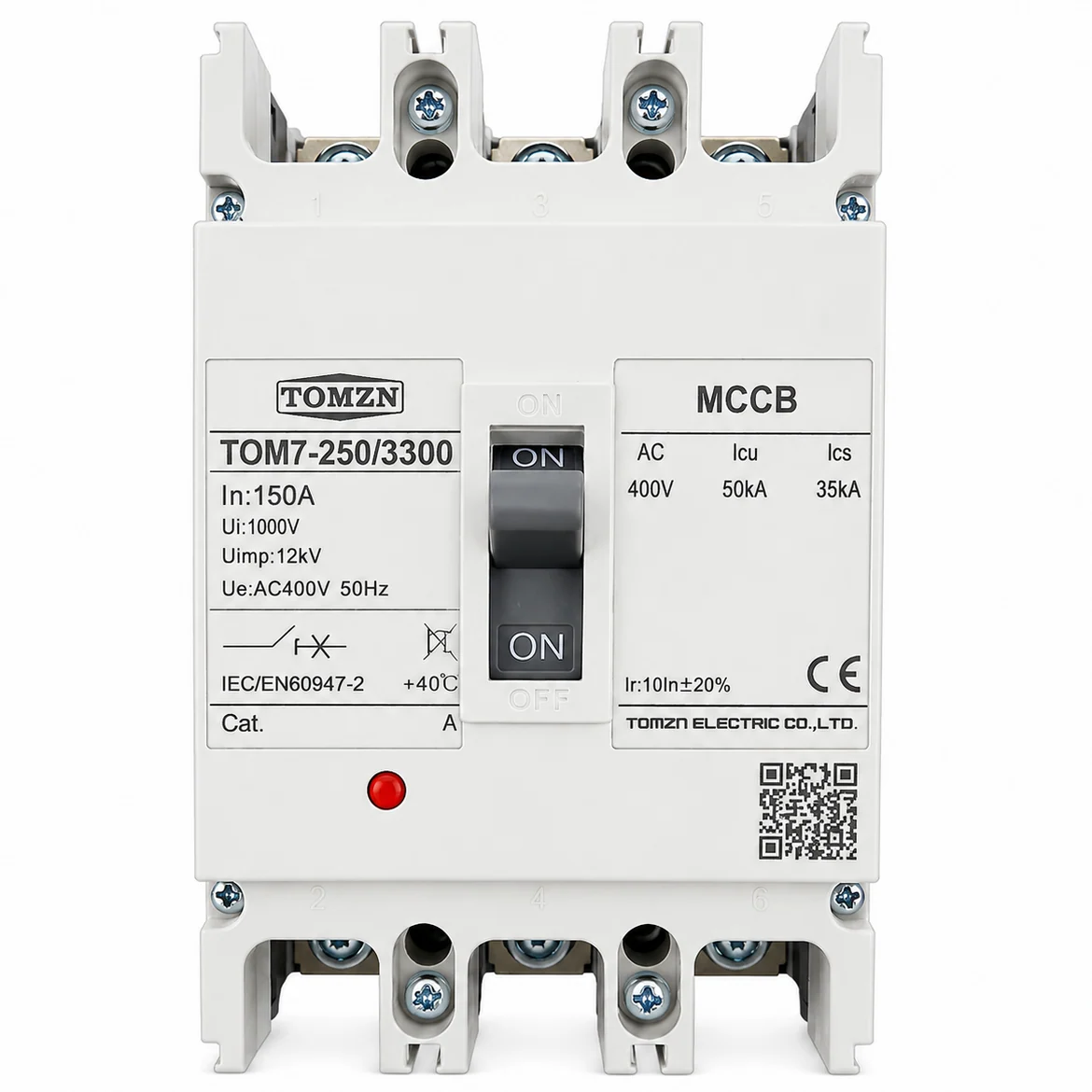
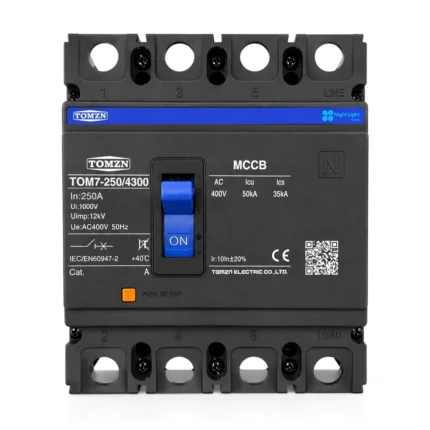
Tomzn 150A 3P MCCB Molded Case Circuit Breaker 3 Pole
The Tomzn 150A 3P MCCB is a molded case circuit breaker designed for electrical distribution and circuit protection in compatible three-phase systems. With a rated current of 150A and a three-pole configuration, this circuit breaker is intended for installations that require a higher-current protection device for managing and protecting electrical circuits.
MCCBs are commonly used in commercial, industrial, and electrical distribution applications. They help protect circuits against overload and short-circuit conditions when correctly selected and installed according to the electrical system’s requirements. The molded case construction provides an enclosed breaker body, while its three-pole arrangement is designed for use with compatible three-phase circuits.
Whether you are upgrading an electrical distribution board, planning a commercial installation, or selecting protection equipment for a compatible industrial application, choosing the correct circuit breaker is important. The Tomzn 150A 3P MCCB can be considered where its electrical ratings and protection characteristics meet the requirements of the installation.
What Is a 150A 3P MCCB?
MCCB stands for Molded Case Circuit Breaker. It is an electrical protection device used to interrupt current when certain fault conditions occur. Unlike a basic switching device, an MCCB is designed to provide circuit protection within its specified operating limits.
The 150A rating identifies the rated current associated with this product listing. The 3P designation means that the breaker has three poles, making it suitable for compatible three-phase electrical arrangements.
A three-pole MCCB is commonly considered for applications where three phase conductors need to be protected and switched together. The exact wiring arrangement and suitability depend on the electrical system design and the manufacturer’s instructions.
Main Features of Tomzn 150A 3P MCCB
1. 150A Rated Current
The Tomzn 150A 3P MCCB is listed with a rated current of 150 amperes. This rating is an important factor when selecting a circuit breaker for a distribution system.
The breaker must be selected according to the expected load current, conductor capacity, installation conditions, and applicable electrical standards. A 150A rating does not mean that every installation carrying up to 150A is automatically suitable. Proper electrical calculations and coordination are necessary.
2. Three-Pole Configuration
The 3P configuration is intended for compatible three-phase electrical systems. Three-pole circuit breakers are commonly used in distribution panels and equipment where three phase conductors require coordinated switching and protection.
Before installation, confirm the system configuration and ensure that the breaker is appropriate for the intended circuit.
3. Molded Case Construction
An MCCB uses an enclosed molded case design. This construction houses the breaker mechanism and internal electrical components.
The molded case format is widely used in distribution equipment because it provides an enclosed structure suitable for panel and switchboard installations. Correct mounting, clearances, terminal connections, and environmental conditions should follow the manufacturer’s instructions.
4. Overload and Short-Circuit Protection
Molded case circuit breakers are generally designed to interrupt excessive current caused by overloads and short circuits, within their specified ratings.
Overload protection helps address situations where a circuit carries more current than intended for a period of time. Short-circuit protection addresses high fault currents that can occur when conductors make an unintended low-resistance connection.
The exact trip characteristics and breaking capacity of this particular 150A model should be confirmed from its product label or official datasheet.
5. Suitable for Compatible Distribution Applications
A 150A three-pole MCCB may be considered for compatible electrical distribution boards, commercial installations, and industrial equipment. The final application must be selected according to the system voltage, available fault current, load requirements, and installation design.
Where Can a 150A 3P MCCB Be Used?
The Tomzn 150A 3P MCCB may be suitable for applications where a three-pole, 150A molded case circuit breaker is required and the product’s full electrical specifications match the installation.
Potential application areas include:
- Commercial electrical distribution: For compatible distribution panels in offices, shops, and commercial buildings.
- Industrial electrical panels: For suitable machinery distribution and industrial power circuits.
- Three-phase distribution boards: Where a three-pole breaker with matching electrical ratings is required.
- Workshop installations: For compatible workshop equipment and distribution circuits.
- Electrical control panels: As part of a properly designed protection and distribution arrangement.
- Building electrical systems: For suitable circuits in commercial and other approved installations.
These are general MCCB application examples, not confirmation that every installation is suitable for this exact model. Always verify the complete specifications before selecting the breaker.
Why Is an MCCB Important in an Electrical System?
Electrical circuits need suitable protection to help reduce the risk of damage caused by abnormal current conditions. Overloads and short circuits can produce excessive heat and electrical stress, potentially damaging cables, equipment, and connected components.
An appropriately selected MCCB helps interrupt a circuit when its protection mechanism detects a fault condition within its operating characteristics.
Using the correct breaker can help:
- Protect compatible electrical circuits against specified overcurrent conditions.
- Reduce the risk of damage to connected electrical equipment.
- Provide a means of switching and isolating a circuit when permitted by the installation design.
- Support organized electrical distribution in panels and switchboards.
- Improve the overall protection arrangement when coordinated with other electrical devices.
A circuit breaker is only one part of an electrical safety system. Proper earthing, cable sizing, protective coordination, installation quality, and routine inspection are also essential.
Understanding the 150A Rating
The 150A rating is one of the first details to consider when selecting this MCCB. However, rated current should never be the only selection factor.
The connected load, conductor size, ambient temperature, enclosure conditions, and installation method can affect the appropriate breaker selection. The breaker must also be coordinated with upstream and downstream protective devices where required.
For example, a circuit carrying a particular operating current may need a breaker rating selected according to the cable’s current-carrying capacity and the applicable electrical design rules. An oversized breaker can fail to provide appropriate protection for an undersized cable.
For this reason, a qualified electrician or electrical engineer should confirm that a 150A MCCB is suitable for the intended circuit.
3-Pole MCCB for Three-Phase Systems
Three-phase power is widely used in commercial and industrial installations. A three-pole MCCB is designed for compatible circuits that use three phase conductors.
The three-pole arrangement allows the breaker to operate across its three poles as designed. This makes it important to confirm that the breaker matches the system’s voltage, earthing arrangement, and protection requirements.
Do not assume that a three-pole breaker is suitable for every three-phase installation. Neutral switching requirements, fault protection, and the overall distribution design must be evaluated separately.
MCCB vs MCB: What Is the Difference?
MCB stands for Miniature Circuit Breaker, while MCCB stands for Molded Case Circuit Breaker. Both are circuit protection devices, but they are used across different ranges of applications and electrical ratings.
An MCB is commonly used in final distribution circuits and lower-current applications. MCCBs are commonly considered for higher-current distribution and commercial or industrial installations.
The correct choice depends on rated current, voltage, breaking capacity, trip characteristics, installation requirements, and the available fault current. A larger current rating alone does not make one device automatically suitable for a particular circuit.
Important Specifications to Confirm Before Purchase
The product title identifies this item as a Tomzn 150A three-pole MCCB. However, several technical details should be checked against the exact product label or manufacturer’s datasheet before ordering or installation.
Please confirm:
- Rated current: 150A, as stated in the product title.
- Number of poles: 3P, as stated in the product title.
- Rated operating voltage: Confirm the exact AC or DC voltage and intended application.
- Breaking capacity (Icu): Confirm the maximum rated ultimate short-circuit breaking capacity.
- Service breaking capacity (Ics): Confirm the rated service short-circuit breaking capacity.
- Trip characteristics: Confirm the trip unit type and adjustable or fixed protection settings, if applicable.
- Frequency: Confirm the supported operating frequency for AC applications.
- Mounting and dimensions: Check panel space, terminal arrangement, and mounting requirements.
- Standards and certifications: Confirm the markings and documentation supplied with the exact model.
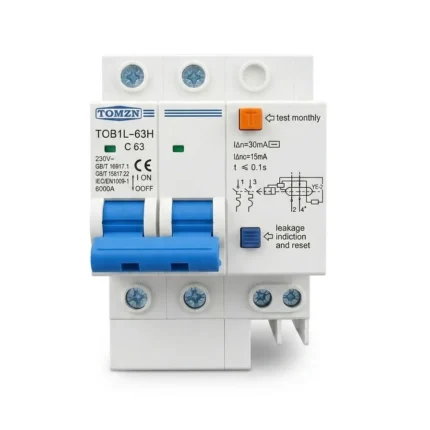
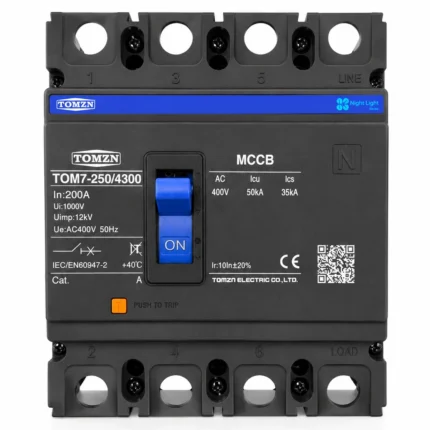
TOMZN lists different MCCB families and variants, so specifications should not be transferred from another model simply because the current rating or brand is similar. The exact model code is important when checking compatibility.
Buying Guide: How to Choose the Right MCCB
Before purchasing a Tomzn 150A 3P MCCB, consider the following points:
- Check the electrical load: Calculate the expected load and confirm that the breaker rating is suitable.
- Verify the system voltage: Make sure the rated voltage matches the intended electrical system.
- Check the pole configuration: Confirm that a three-pole breaker is appropriate for the circuit.
- Review breaking capacity: The breaker must be able to interrupt the prospective fault current at its installation point.
- Confirm trip settings: Make sure the protection characteristics are suitable for the connected equipment and cables.
- Check physical compatibility: Verify dimensions, terminal connections, and mounting arrangements.
- Consult a professional: Have a qualified electrician or electrical engineer confirm the selection and installation.
These checks help ensure that the selected MCCB is appropriate for the intended application rather than relying on the product name alone.
Why Choose Tomzn Electrical Protection Products?
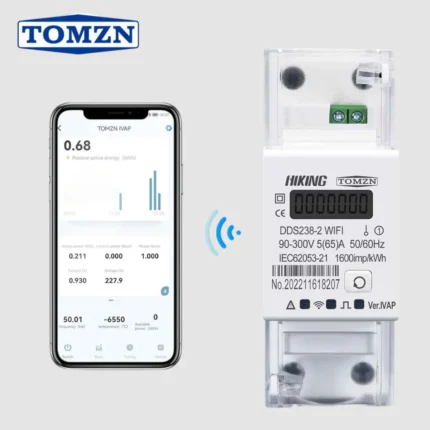
TOMZN offers a range of electrical protection and distribution products, including MCBs, MCCBs, residual current protection devices, and other electrical accessories.
When selecting a TOMZN circuit breaker, it is important to identify the exact model and verify its ratings. Different products within the same brand can have different voltage ratings, pole configurations, and short-circuit performance.
Choosing the correct model and following the manufacturer’s installation instructions are essential for reliable electrical protection.
Buy Tomzn 150A 3P MCCB from Asbaab.pk
Looking for the Tomzn 150A 3P MCCB for a compatible electrical distribution project? Explore electrical products at Asbaab.pk and choose equipment according to your installation requirements.
Before placing your order, check the product details and confirm the exact model specifications, including voltage, breaking capacity, and trip characteristics. If you are unsure whether this breaker is suitable for your application, consult a qualified electrical professional.
Asbaab.pk aims to make it easier to explore electrical products for residential, commercial, and industrial requirements.
Frequently Asked Questions
1. What does 150A mean in a Tomzn MCCB?
The 150A marking identifies the rated current stated for the product. The correct application depends on the connected load, cable capacity, installation conditions, and the breaker’s complete specifications.
2. What does 3P mean in a circuit breaker?
3P means three-pole. It identifies a breaker designed for compatible three-phase circuit arrangements where three poles are operated as designed.
3. What is an MCCB used for?
An MCCB is used for circuit protection and switching in electrical distribution systems. It is generally designed to interrupt overload and short-circuit currents within its specified ratings.
4. Can this MCCB be used in an industrial panel?
It may be suitable for an industrial panel if its voltage, breaking capacity, trip characteristics, current rating, and physical configuration match the installation. A professional should verify suitability.
5. Is a 150A MCCB suitable for every 150A load?
No. Breaker selection also depends on cable capacity, load characteristics, ambient conditions, fault current, and applicable electrical standards. The rated current alone is not enough to establish suitability.
6. What is the difference between a 3P and 4P MCCB?
A 3P MCCB has three poles, while a 4P MCCB has four. The appropriate configuration depends on the electrical system and whether neutral switching is required.
7. What is breaking capacity in an MCCB?
Breaking capacity is the specified fault-current level that a circuit breaker can interrupt under defined test conditions. It must be suitable for the prospective short-circuit current at the installation point.
8. What specifications should I check before buying?
Confirm the rated voltage, rated current, pole configuration, Icu, Ics, trip characteristics, frequency where applicable, dimensions, and manufacturer’s model code.
Safety and Installation Notice
Electrical circuit breakers should be selected and installed by qualified professionals. Always isolate the power supply before electrical work and follow the manufacturer’s wiring, mounting, and operating instructions.
Never exceed the rated operating limits of the device. Do not select a breaker based only on its ampere rating. Confirm the complete electrical specifications and ensure that the breaker is compatible with the circuit, connected cables, and available fault current.
The Tomzn 150A 3P MCCB should only be used in an application that matches the exact product specifications and applicable electrical safety requirements.




Reviews
There are no reviews yet.