

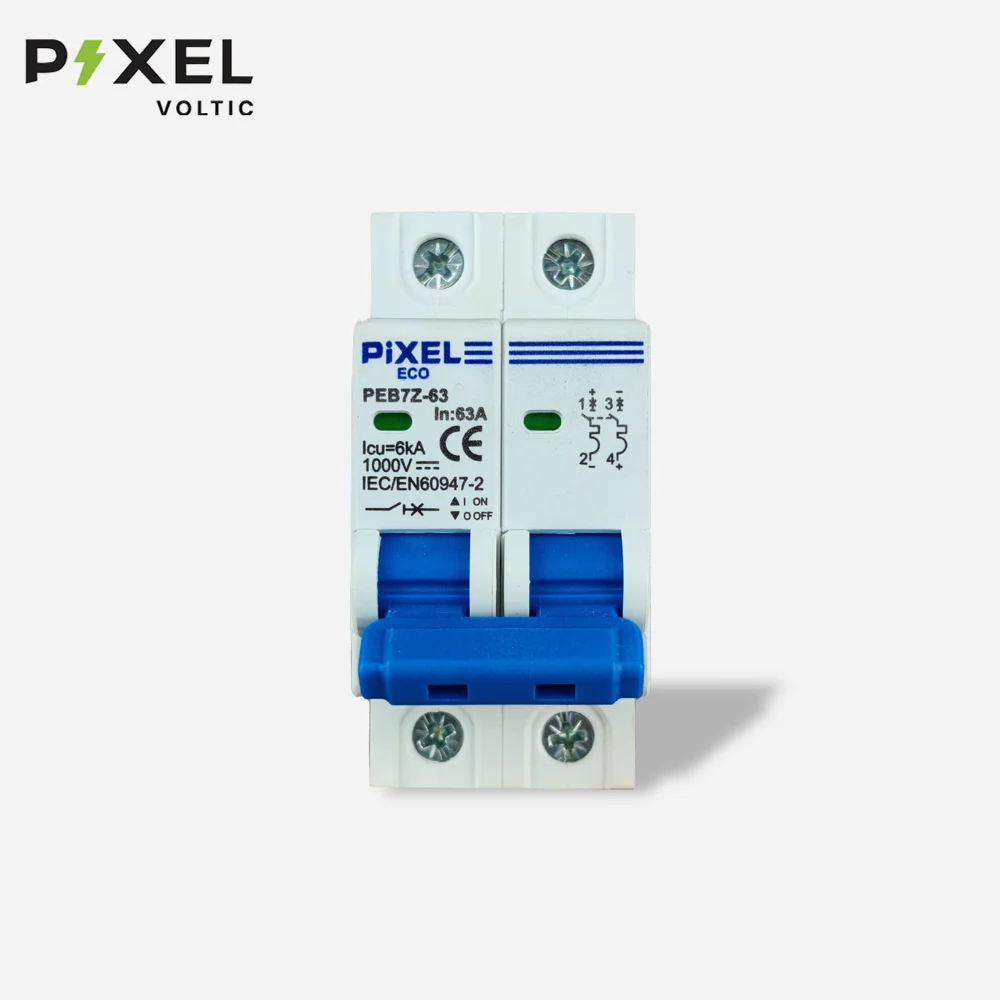
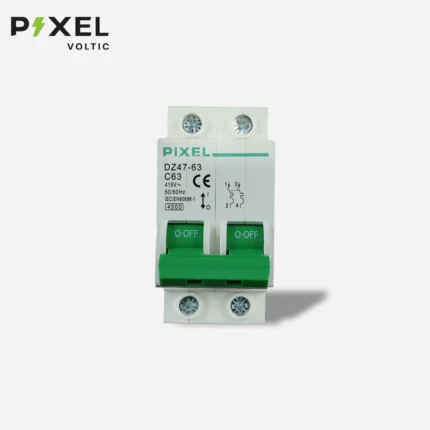
Pixel 2P ECO DC MCB 63A Breaker (1000V)
The Pixel 2P ECO DC MCB 63A Breaker (1000V) is a direct-current miniature circuit breaker designed for compatible DC electrical systems requiring circuit protection at higher DC voltage levels. With a 2-pole configuration, 63A current rating, and 1000V DC rating, this breaker can be considered for suitable solar photovoltaic systems, DC distribution circuits, and other compatible electrical applications where these specifications meet the requirements of the installation. A DC MCB is an important component in electrical protection because DC circuits require protective devices specifically designed and rated for direct-current operation. Unlike AC circuits, DC circuits do not have the same natural current zero-crossing characteristic, so a breaker intended for DC applications must be selected according to its DC rating and application. The Pixel ECO DC MCB provides a dedicated option for installations where reliable circuit protection and appropriate DC switching are required.
The 63A rating identifies the nominal current rating of the breaker, while the 1000V specification identifies its rated DC voltage as stated in the product name. These two specifications are important when selecting a breaker, but they should not be considered independently. The correct MCB must be coordinated with the connected load, cable capacity, system voltage, available fault current, circuit configuration, and overall electrical protection design. A 63A breaker should therefore only be installed where the complete electrical system is designed to operate appropriately with this protection rating. Similarly, the 1000V rating does not mean that the breaker should automatically be used in every DC system up to 1000V. The actual system voltage and the manufacturer’s technical specifications must always be checked before installation.
The 2P configuration means that the breaker has two poles and is intended for suitable two-pole DC circuit arrangements. The correct use of the two poles depends on the design of the electrical system and the manufacturer’s connection instructions. Proper polarity, terminal connections, and circuit configuration are particularly important in DC installations. Incorrect wiring can affect the operation of protective equipment and create electrical hazards. For this reason, the breaker should be installed according to the manufacturer’s wiring diagram and applicable electrical regulations.
One of the key applications for a high-voltage DC MCB is solar photovoltaic protection. Solar PV systems generate direct current and can operate at relatively high DC voltages, particularly in larger string configurations. A suitable DC circuit breaker can be incorporated into the protection and isolation arrangement of a photovoltaic installation where its voltage, current, interruption capability, and other technical characteristics are appropriate. The Pixel 2P ECO DC MCB 63A Breaker (1000V) can be considered for compatible PV applications requiring a 63A DC protection device with a 1000V rating. The actual selection should always be based on the maximum system voltage, expected operating current, string configuration, fault conditions, and complete system design.
DC circuit protection is important because electrical faults can cause excessive current through conductors and connected equipment. An appropriately selected MCB is designed to respond to overcurrent conditions according to its operating characteristics, helping to reduce the risk associated with overloads and certain circuit faults. The breaker should be viewed as one component within the overall protection system. Depending on the application, additional equipment such as DC surge protection devices, isolators, fuses, grounding or earthing arrangements, monitoring equipment, and other protective devices may also be required.
The ECO designation forms part of the product name and identifies this particular Pixel product range. Users should not assume additional technical characteristics from the word ECO alone. The actual performance, breaking capacity, trip characteristics, installation method, standards, dimensions, and other specifications should be confirmed from the manufacturer’s product documentation. This is especially important when selecting a breaker for a 1000V DC application because the electrical requirements can vary considerably between solar, battery, industrial, and other DC systems.
A 1000V DC circuit breaker is particularly relevant to modern photovoltaic installations where higher system voltages can be used to improve system configuration and reduce certain transmission losses. However, higher DC voltage also increases the importance of correct equipment selection and installation. Every component in the circuit must be appropriately rated for the actual operating conditions. The breaker, cables, connectors, isolators, protection devices, and other components should all be selected as part of a coordinated electrical system.
The Pixel 2P ECO DC MCB 63A Breaker (1000V) can also be considered for compatible DC distribution applications. DC distribution boards may require individual circuit protection for separate loads or branches. A dedicated DC MCB can provide a convenient way to protect and isolate an appropriate circuit. The 2-pole design can be useful in systems where two conductors need to be controlled according to the electrical design. The exact connection arrangement should always be confirmed before installation.
Battery and energy-storage systems can also contain DC circuits requiring suitable circuit protection. In these applications, the breaker must be selected according to the battery voltage, expected current, available fault current, conductor capacity, and equipment requirements. Battery systems can deliver substantial fault current, making proper protection particularly important. The Pixel 2P ECO DC MCB 63A Breaker should only be used in battery-related applications when its complete technical specifications are appropriate for the particular system.
Applications, Selection, Installation and Benefits
The Pixel 2P ECO DC MCB 63A Breaker (1000V) is suitable for consideration in a variety of compatible DC electrical applications. Its combination of a 2-pole configuration, 63A current rating, and 1000V DC rating makes it relevant to users searching for a high-voltage DC miniature circuit breaker for solar and other direct-current installations. In photovoltaic systems, it may be used as part of a properly designed DC protection and isolation arrangement. In DC distribution systems, it can provide protection for compatible circuits. It may also be considered for suitable battery, control, industrial, and other DC applications where the electrical requirements match the product specifications.
For solar installations, selecting the right DC MCB is particularly important. A PV system may operate continuously during daylight conditions, and certain portions of the system can remain energized even when other parts of the installation have been switched off. This means that appropriate DC isolation and protection equipment is essential. A breaker used in a PV installation should be selected based on the maximum DC system voltage, operating current, fault conditions, environmental conditions, and applicable installation requirements. The 1000V rating of the Pixel breaker provides an important selection reference, but the complete product specification must still be checked before use.
The 63A current rating also requires careful consideration. The correct MCB rating should be coordinated with the circuit conductors and connected equipment. Cable size alone should not be used as the only selection factor, and the breaker should not be oversized simply to prevent nuisance tripping. Electrical designers and installers should consider the expected operating current and applicable protection requirements when determining whether a 63A MCB is appropriate for the circuit.
The 2-pole configuration provides a compact solution for compatible DC circuit arrangements. Depending on the system design, both poles may be used according to the manufacturer’s specified wiring configuration. Polarity and terminal identification should be carefully observed during installation. DC equipment should never be wired based solely on appearance or assumptions about how an AC breaker would be connected.
Another important consideration is the breaker’s interruption capability. The 63A current rating describes the nominal current rating, but it does not by itself define the maximum fault current the device can safely interrupt. For a professional installation, the available short-circuit current should be evaluated and compared with the manufacturer’s specified breaking capacity. This is especially important for high-energy systems such as photovoltaic arrays and battery installations.
When installing the Pixel 2P ECO DC MCB 63A Breaker (1000V), the installer should verify the system voltage, operating current, polarity, terminal arrangement, cable capacity, available fault current, and applicable electrical requirements. The manufacturer’s installation instructions should be followed carefully. Connections should be secure and made using the appropriate wiring and termination methods. The installation environment should also be suitable for the breaker according to the manufacturer’s specifications.
Electrical installation should be carried out by a suitably qualified professional where required. High-voltage DC systems can present serious hazards, and photovoltaic and battery circuits may remain energized under certain conditions. Proper isolation, verification of the absence of hazardous voltage where applicable, and appropriate personal protective procedures should be followed before electrical work is performed. The MCB itself should not be considered a substitute for a complete safe-isolation procedure.
The breaker can also contribute to convenient circuit isolation when used according to its intended design. Isolation can be important during maintenance, inspection, troubleshooting, and servicing. However, the suitability of the breaker for isolation purposes should be confirmed from the manufacturer’s specifications and the requirements of the particular installation.
Regular inspection can help maintain the reliability of the electrical protection system. Users should check for visible signs of damage, overheating, discoloration, loose connections, unusual smells, or other abnormal conditions. If a breaker trips repeatedly, the cause should be investigated rather than repeatedly resetting it without identifying the underlying problem. Repeated tripping can indicate overload, short circuit, equipment malfunction, or an incorrectly selected protection device.
The Pixel 2P ECO DC MCB 63A Breaker (1000V) can be a practical choice for users searching for a 63A 1000V DC circuit breaker for compatible electrical applications. Its dedicated DC configuration makes it more appropriate for DC systems than an AC-only MCB, while its 2-pole design provides a suitable option for compatible two-pole circuit arrangements. The 1000V rating makes it particularly relevant to higher-voltage DC applications, including appropriate photovoltaic systems.
When comparing DC MCBs, buyers should look beyond the product name and consider the complete technical specification. Important factors include rated DC voltage, current rating, number of poles, breaking capacity, trip characteristics, terminal configuration, operating conditions, installation requirements, and applicable standards. These characteristics should be confirmed using reliable manufacturer documentation before the product is selected for a specific project.
For online searches and product selection, the Pixel 2P ECO DC MCB 63A Breaker (1000V) can be described using terms such as 2P DC MCB 63A, 1000V DC MCB, 63A solar DC breaker, 1000V solar MCB, and 2 pole DC circuit breaker. These search terms reflect common ways customers may look for a high-voltage DC circuit protection device while retaining the key product specifications.
Overall, the Pixel 2P ECO DC MCB 63A Breaker (1000V) is designed for compatible DC electrical applications where a 2-pole, 63A, 1000V DC circuit breaker is required. It can be considered for solar photovoltaic, DC distribution, battery-related, and other suitable installations. Its effectiveness depends on correct product selection, appropriate system design, proper installation, and coordination with other protective equipment.
For the best results, the complete electrical system should be assessed before installation. The actual voltage, current, fault conditions, cable requirements, and protection arrangement should all be considered. Following the manufacturer’s specifications and applicable electrical safety requirements helps ensure that the breaker is used within its intended operating conditions and contributes effectively to the protection of the compatible DC circuit.



Reviews
There are no reviews yet.